Ranking Every Xbox Console for Retro Collectors
Published on 20 August 2026
When building a physical media collection in the Microsoft ecosystem, navigating the generations of hardware requires more than just picking up the newest machine. Having every xbox console ranked by reliability, region quirks, and backward compatibility gives you a clear roadmap for preserving and playing your games. Whether you want to experience true native hardware exactly as it was in the early 2000s or upscale classic discs on modern displays, this guide reveals exactly what to look for and what to avoid.
The Original Xbox: Pure Nostalgia with a Ticking Clock
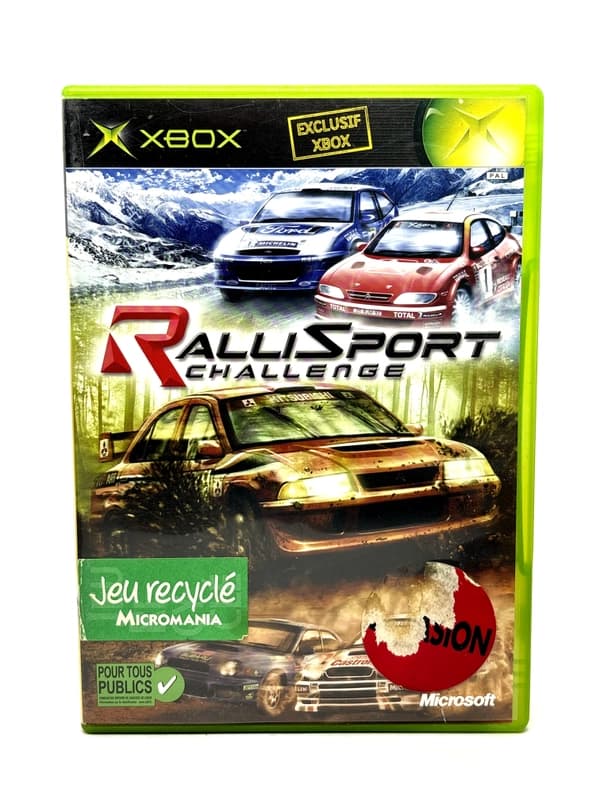
The console that started it all remains a powerhouse of early 2000s gaming, but it requires serious maintenance to survive today. When looking for the best xbox for retro gaming, many purists insist on the original hardware to play games exactly as they were designed, without emulation glitches. However, the system is notorious for a fatal design flaw. Understanding the original xbox hardware revisions—ranging from version 1.0 to 1.6—is absolutely vital before you make a purchase.
Every single console manufactured before revision 1.6 contains an aerogel clock capacitor that is highly prone to leaking corrosive electrolytic fluid directly onto the motherboard. Immediate xbox clock capacitor removal is mandatory for revisions 1.0 through 1.5. If left unchecked, the acid will eat through the traces, resulting in a dead console. Revision 1.6 models use a higher-quality capacitor that does not leak, but they come with minor video output issues in a handful of games, making revision 1.4 the holy grail for modders who are willing to snip the capacitor themselves.
Beyond the motherboard, the DVD drive is the next major point of failure. Microsoft sourced optical drives from multiple manufacturers, and they are not created equal. Thomson drives, frequently found in early models, are highly prone to laser failure and disc read errors. Collectors heavily prefer consoles equipped with Philips or Hitachi-LG drives, as their lasers have proven far more resilient over the decades.
For European players, the system has frustrating region limitations. Out of the box, PAL consoles were locked to 50Hz or 60Hz interlaced signals, completely locking users out of the crisp 480p output available to North American players. Unlocking progressive scan requires softmodding the console and running the Enigmah video mode switch application to toggle the system into NTSC mode. When hunting for hardware, always prioritise consoles that come with authentic Controller S or the original Duke pads. Ensure the proprietary breakaway cables are intact, as these are frequently lost by previous owners, leaving the controllers useless.
Xbox 360: Surviving the Red Ring Era
The seventh generation of gaming is infamous for the Red Ring of Death (RRoD), a catastrophic hardware failure caused by thermal stress on the GPU solder joints. When evaluating every xbox console ranked for long-term survival, early Xbox 360 models sit firmly at the bottom. However, Microsoft quietly revised the internals multiple times, eventually producing one of the most reliable consoles of the era.
To help you navigate the used market, we must look at the power requirements printed on the rear sticker of the console. This amperage rating is the key to identifying the motherboard revision without opening the case.
| Motherboard Revision | Release Era | 12V Amperage | Reliability | Notes |
|---|---|---|---|---|
| Xenon / Zephyr | 2005 - 2007 | 16.5A | Very Poor | Avoid entirely. Highest RRoD failure rates. |
| Falcon / Opus | 2007 - 2008 | 14.2A | Moderate | Improved GPU cooling, but still prone to failure over time. |
| Jasper | Late 2008 - 2009 | 12.1A | Excellent | The safest "fat" model. GPU and CPU die shrinks eliminated RRoD. |
| Kronos | Late 2009 - 2010 | 12.1A | Excellent | A revision of the Jasper with even better thermal performance. |
| Trinity / Corona | 2010 - 2013 | 10.83A / 9.6A | Very Good | Found in the "Slim" models. Reliable, but lasers can wear out. |
For physical collectors, an xbox 360 jasper motherboard (or its Kronos variant) is the ultimate prize. These units retain the classic dashboard aesthetic and memory unit slots while offering bulletproof reliability.
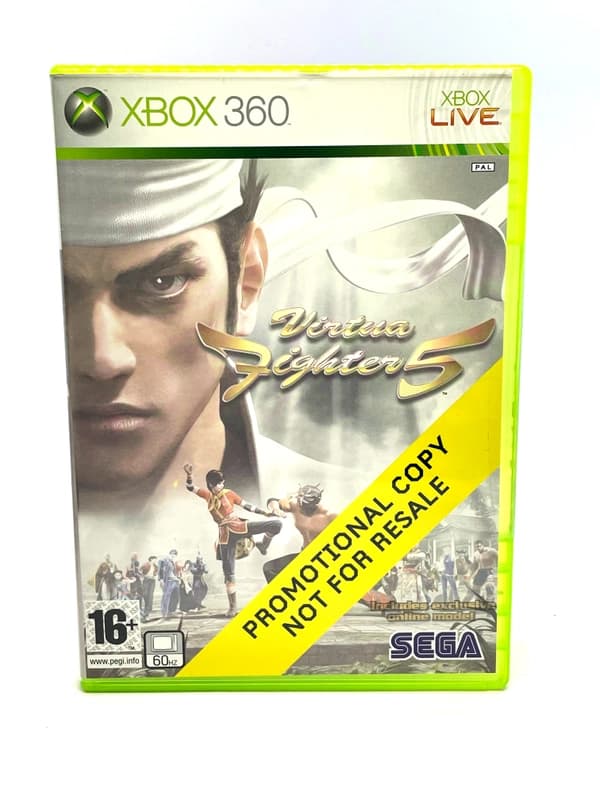
When buying games, PAL users must tread carefully. The Xbox 360 is fundamentally region-locked, but publisher policies were inconsistent. Many North American and Japanese NTSC releases were actually printed as region free xbox 360 games. Collectors must consult online compatibility databases before importing games, as a region-locked NTSC disc will simply throw an error on a standard PAL console.
If you intend to use your 360 for pal xbox backwards compatibility to play original Xbox titles, you must have an official Microsoft OEM hard drive attached. Cheap third-party hard drives from generic online marketplaces lack the proprietary hidden partition containing the emulation software. Without this official software, original Xbox discs will not boot.
Finally, the peripheral market is flooded with knock-offs. Spotting fake xbox 360 controllers is crucial for a good experience. Always check for the official Microsoft oval hologram sticker on the cable or the battery pack. Knock-offs typically feature a cheap, stiff guide button that lacks a smooth click, and the analogue sticks will have massive deadzones with overly stiff tension that makes precision aiming impossible.
Explore products
Explore more products from our catalogue.
Xbox One Family: The Region-Free Turning Point
The Xbox One generation marked a massive shift in Microsoft's approach to consumer rights and legacy media. When looking at every xbox console ranked by sheer convenience for global collectors, the Xbox One family is a watershed moment because it finally abandoned region locking for physical discs. This makes it a safe haven for European collectors who want to import Japanese shoot-'em-ups or North American role-playing games without worrying about hardware barriers.
Within this generation, we rank the Xbox One X as the absolute superior choice. The base 2013 'VCR' model and the later Xbox One S simply cannot compete with the One X's ability to upscale backward-compatible original Xbox and 360 games to stunning 4K resolution. The One X leverages its massive memory bandwidth to force 16x anisotropic filtering on legacy titles, making them look better than they ever did on original hardware.
However, buyers must be warned about the original 2013 'VCR' Xbox One models. When buying loose or used units, these early consoles have a remarkably high failure rate regarding their slot-loading Blu-ray drives. They frequently refuse to pull discs in, make grinding noises, or fail to read dual-layer discs entirely. Upgrading to a One S or One X avoids these widespread mechanical drive issues.
The major caveat for this generation is how it handles legacy media. Backward compatibility here is not native hardware execution; it relies on downloading a digital emulation wrapper. When you insert a classic disc, the console merely uses it as a DRM key to verify ownership, and then downloads a modified version of the game from Xbox Live. For offline purists aiming to build a self-sustaining library that survives without internet servers, this is a significant drawback.
Xbox Series X|S: Modern Hardware for Classic Discs
The current generation presents a fascinating divide for retro gaming enthusiasts. Microsoft heavily leaned into preservation through software, but split their hardware strategy.
We rank the Xbox Series X exceptionally high as the best xbox for retro gaming in a modern living room setup. Its comprehensive physical backward compatibility is bolstered by system-level enhancements like Auto HDR and FPS Boost. For PAL collectors, this is a revelation. Many classic European games were originally locked to sluggish 50Hz refresh rates and 30fps caps. The Series X can force many of these titles to run at a blisteringly smooth 60fps with modern colour grading, completely revitalising the experience without requiring mods or original hardware.
Conversely, we rank the Xbox Series S at the very bottom of our list for physical collectors. Its complete lack of a disc drive makes it entirely useless for playing a legacy CIB (Complete in Box) collection. If you own shelves of classic discs, the Series S is nothing more than a digital storefront machine.