SNES vs Sega Genesis (Mega Drive): Which 16-Bit Console Won?
Published on October 14, 2026
The SNES vs Sega Genesis debate defined playground arguments throughout the 1990s, but evaluating these consoles thirty years later requires a very different checklist. If you are buying or collecting in Europe, you also have to navigate the quirks of PAL 50Hz conversions, RGB SCART cable specifications, and aging silicon. This guide breaks down the 16-bit console war from a modern European collector's perspective, comparing hardware revisions, library strengths, reliability, and what you actually need to look for before buying.
The PAL Factor: Why the Mega Drive Dominated Europe while America Played SNES
Before diving into hardware, we need to clear up the naming convention: the console known as the Sega Genesis in North America is the exact same machine sold as the Sega Mega Drive in Europe, Japan, and Australia. Sega only used the Genesis name in North America due to a trademark dispute. While Nintendo eventually edged out Sega in North American and Japanese sales, the European market told a completely different story.
Sega launched the Mega Drive across Europe in late 1990, backed by aggressive distribution and localized marketing from Virgin Mastertronic. Nintendo did not release the PAL Super Nintendo until mid-1992. That nearly two-year head start, combined with strong bundles featuring Sonic the Hedgehog and a library tailored toward arcade and sports fans, allowed the Mega Drive to dominate the UK and much of mainland Europe.
However, both consoles suffered from the technical limitations of the European PAL television standard. While North American and Japanese NTSC consoles ran at 60Hz, European PAL consoles output at 50Hz. Because most developers in Japan and the US designed games around a 60Hz clock, lazy PAL conversions simply slowed the game logic and music down by 17.5% and squashed the image vertically, leaving thick black borders at the top and bottom of the screen.
Evaluating a PAL SNES vs Mega Drive today requires knowing how developers handled this 50Hz penalty:
- Unoptimized PAL releases: Early Mega Drive titles like the original Sonic the Hedgehog (PAL) run noticeably slower than their NTSC counterparts, with sluggish physics and slowed-down music. Many early SNES titles, including Super Mario World and Super Mario Kart, suffer the same border-heavy, slowed-down fate.
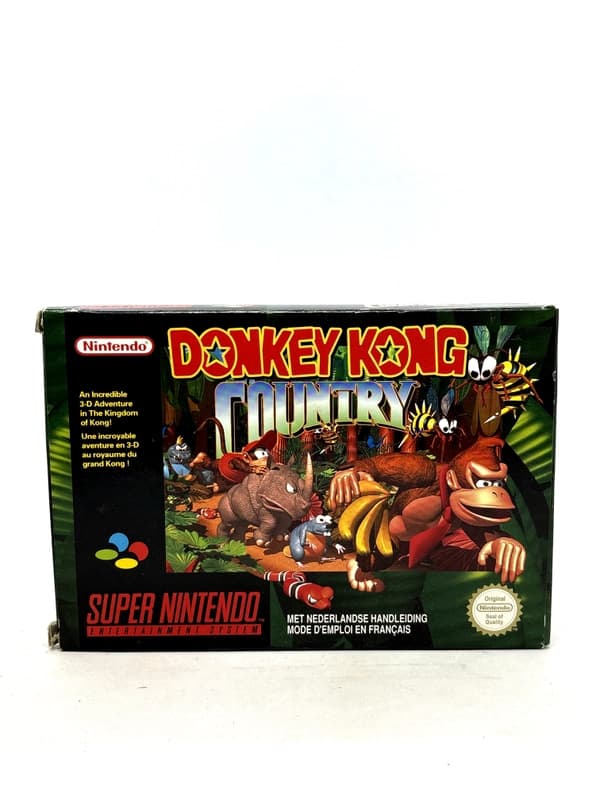
- Optimized PAL releases: Later in the generation, particularly from European studios, games were properly adjusted for 50Hz. Rare's Donkey Kong Country series on the SNES and Sega's Sonic the Hedgehog 3 run at closer-to-intended speeds with full-screen or near-full-screen presentation in PAL territories.
- Regional lockouts: If you want to bypass 50Hz by importing US or Japanese games, both consoles will fight you. The PAL SNES uses both a curved physical shell (shared with the Japanese Super Famicom, blocking boxy US cartridges) and an internal CIC lockout chip that verifies region and television standard. Early Mega Drive games are often region-free once you bypass the physical slot shape, though titles released from 1993 onward frequently include software locks that check whether the console is set to English/ International or Japanese, and 50Hz or 60Hz.
Under the Hood: Motorola 68000 Speed vs Ricoh 5A22 Color & Mode 7
When looking at SNES hardware specs vs Genesis, it becomes obvious that Sega and Nintendo built their machines with opposing philosophies. Sega engineered the Mega Drive around raw processor speed derived from its arcade boards, while Nintendo built the SNES around custom graphics and audio co-processors.
| Specification | Super Nintendo (PAL SNSP-001A) | Sega Mega Drive / Genesis (PAL MK-1601-05) |
|---|---|---|
| Main CPU | Ricoh 5A22 @ 3.58 MHz (max) | Motorola 68000 @ 7.61 MHz (PAL) / 7.67 MHz (NTSC) |
| Secondary CPU / Sound | Sony SPC700 + S-DSP | Zilog Z80 @ 3.55 MHz |
| Master Palette | 32,768 colours | 512 colours |
| On-Screen Colours | Up to 256 simultaneous | Up to 64 simultaneous |
| Standard Resolution | 256×224 to 512×448 | 320×224 (standard) or 256×224 |
| Hardware Features | Mode 7 scaling/rotation, colour math | Shadow/Highlight mode, higher horizontal resolution |
| Cartridge Co-Processors | Common (Super FX, SA-1, DSP-1, CX4) | Rare (Sega Virtua Processor in Virtua Racing) |
The Mega Drive's Motorola 68000 runs at more than double the clock speed of the SNES's Ricoh 5A22. Although clock speed is not a direct measure of performance across different architectures, the 68000 has a clear advantage in handling dozens of fast-moving objects, complex collision detection, and rapid scrolling. This is why early SNES shoot-'em-ups like Gradius III and Super R-Type grind to a crawl when the screen fills with bullets, whereas Mega Drive shooters like Thunder Force IV and Gunstar Heroes push chaotic action with far more consistent frame rates.
Where the SNES pulls ahead is its dual-PPU (Picture Processing Unit) architecture. With a master palette of 32,768 colours and up to 256 colours on screen at once, SNES games feature smooth gradients, atmospheric lighting, and genuine hardware transparency effects. The Mega Drive is restricted to 64 simultaneous colours from a 512-colour master palette. To compensate, Mega Drive artists relied heavily on dithering—checkerboard pixel patterns that blended together on blurry 1990s CRT televisions via composite video to simulate extra colours and transparency.
The SNES also features Mode 7, a background layer mode capable of rotating and scaling a flat texture in real time to create pseudo-3D planes in games like F-Zero, Super Mario Kart, and Pilotwings. The Mega Drive lacks native hardware scaling, forcing talented programmers at studios like Treasure and Traveller's Tales to achieve similar effects entirely through clever CPU-driven software tricks.
To overcome the sluggish Ricoh 5A22 CPU later in the console's lifespan, Nintendo built enhancement chips directly into the game cartridges:
- DSP-1: Added fast math calculations for Mode 7 games like Super Mario Kart.
- Super FX (GSU-1 / GSU-2): Rendered polygon graphics for Starwing (Star Fox in the US) and Super Mario World 2: Yoshi's Island.
- SA-1: Essentially a second, faster CPU clocked at 10.74 MHz inside the cartridge, used in Super Mario RPG and Kirby's Fun Pak.
For modern collectors, these enhancement chips mean higher cartridge prices and slightly steeper requirements if you plan to use a flashcart or clone console.
Sound Chips: Sony SPC700 Orchestral Samples vs Yamaha YM2612 FM Synthesis
Nothing divides fans in the SNES vs Sega Genesis debate quite like the audio hardware. Both sound subsystems are iconic, yet they operate on completely different principles.
The SNES uses a custom Sony SPC700 co-processor paired with a 16-bit digital signal processor (S-DSP). It is an 8-channel ADPCM sample-based chip with 64 KB of dedicated RAM. Composers could load tiny digital recordings of real instruments—strings, timpani, pianos, slap bass—and play them back across various pitches with hardware echo and reverb. In the hands of masters like Yasunori Mitsuda (Chrono Trigger) and David Wise (Donkey Kong Country 2), the SNES produced lush, ambient, and orchestral soundtracks that sounded generations ahead of 8-bit chiptunes. The catch was the tight 64 KB memory limit; to squeeze both music data and instrument samples into RAM, developers had to heavily compress the audio, often resulting in a muffled, low-pass-filtered sound when poorly balanced.
The Mega Drive takes the opposite approach, pairing a Yamaha YM2612 6-channel FM (Frequency Modulation) synthesizer chip with a Texas Instruments SN76489 PSG (Programmable Sound Generator) chip left over from the Master System era, all managed by a dedicated Zilog Z80 CPU. Instead of playing back recorded samples (aside from a single channel capable of crunchy 8-bit PCM drum samples), the YM2612 generates sounds mathematically in real time by modulating sine waves.
When programmed well, the YM2612 delivers punchy, metallic basslines, soaring synth leads, and crisp percussion that cut right through the mix. Soundtracks like Yuzo Koshiro's Streets of Rage 2, Sonic the Hedgehog 2, and Thunder Force IV remain masterclasses in electronic and rock synthesis. However, the Mega Drive gained an unfair reputation for "farty," grating audio in the West largely because of the GEMS sound driver. Provided by Sega of America to Western developers, GEMS was easy to use but shipped with a library of harsh default instrument patches that many studios dropped into their games without adjustment.
Explore products
Explore more products from our catalogue.

Game Libraries: RPGs and Platformers vs Arcade Ports and Sports
Hardware specs only matter insofar as they shaped the software libraries. When buying a retro 16-bit console, your choice should come down to the genres you actually enjoy playing.
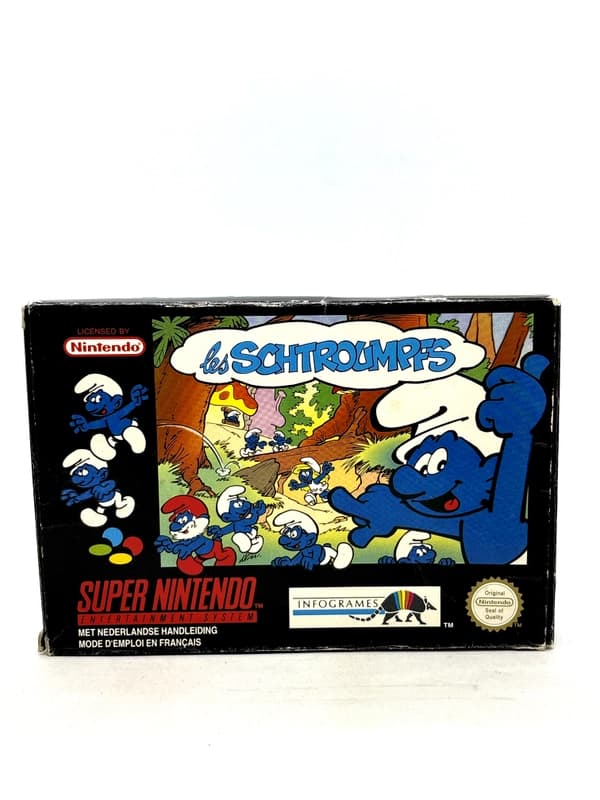
The SNES is the undisputed champion of slow-burn JRPGs, sprawling action-adventures, and atmospheric platformers. Titles like The Legend of Zelda: A Link to the Past, Super Metroid, Super Mario World, and Donkey Kong Country represent some of the most polished game design in history. While North America received a golden run of Squaresoft and Enix RPGs that skipped Europe (such as Chrono Trigger, Final Fantasy III/VI, and EarthBound), PAL collectors received a few remarkable consolations. Most notably, Europe received an official English release of Quintet's masterpiece action-RPG Terranigma, along with big-box PAL releases of Secret of Mana, Illusion of Time, Secret of Evermore, and Lufia.
The Mega Drive owned the living room if you wanted arcade action, shoot-'em-ups (shmups), beat-'em-ups, and sports games. Sega's strong arcade heritage meant home conversions of Golden Axe, Streets of Rage 2, Shinobi III, and OutRun felt fast and responsive. Third-party developers like Treasure pushed the system to its limits with Gunstar Heroes, Alien Soldier (which received a physical PAL release but only a digital service release in North America), and Dynamite Headdy. Meanwhile, Electronic Arts built its empire on the Mega Drive; titles like FIFA International Soccer, NHL '94, and Road Rash II almost always played faster and smoother on Sega's hardware than on the SNES.
Comparing multi-platform releases highlights just how differently these two systems were treated: