SNES vs Sega Genesis (Mega Drive): Which 16-Bit Console Won?
Published on October 14, 2026
SNES vs Sega Genesis (Mega Drive): Which 16-Bit Console Won?
The SNES vs Sega Genesis debate defined playground arguments throughout the 1990s, but evaluating these consoles thirty years later requires a very different checklist. If you are buying or collecting in Europe, you also have to navigate the quirks of PAL 50Hz conversions, RGB SCART cable specifications, and aging silicon. This guide breaks down the 16-bit console war from a modern European collector's perspective, comparing hardware revisions, library strengths, reliability, and what you actually need to look for before buying.
The PAL Factor: Why the Mega Drive Dominated Europe while America Played SNES
Before diving into hardware, we need to clear up the naming convention: the console known as the Sega Genesis in North America is the exact same machine sold as the Sega Mega Drive in Europe, Japan, and Australia. Sega only used the Genesis name in North America due to a trademark dispute. While Nintendo eventually edged out Sega in North American and Japanese sales, the European market told a completely different story.
Sega launched the Mega Drive across Europe in late 1990, backed by aggressive distribution and localized marketing from Virgin Mastertronic. Nintendo did not release the PAL Super Nintendo until mid-1992. That nearly two-year head start, combined with strong bundles featuring Sonic the Hedgehog and a library tailored toward arcade and sports fans, allowed the Mega Drive to dominate the UK and much of mainland Europe.
However, both consoles suffered from the technical limitations of the European PAL television standard. While North American and Japanese NTSC consoles ran at 60Hz, European PAL consoles output at 50Hz. Because most developers in Japan and the US designed games around a 60Hz clock, lazy PAL conversions simply slowed the game logic and music down by 17.5% and squashed the image vertically, leaving thick black borders at the top and bottom of the screen.
Evaluating a PAL SNES vs Mega Drive today requires knowing how developers handled this 50Hz penalty:
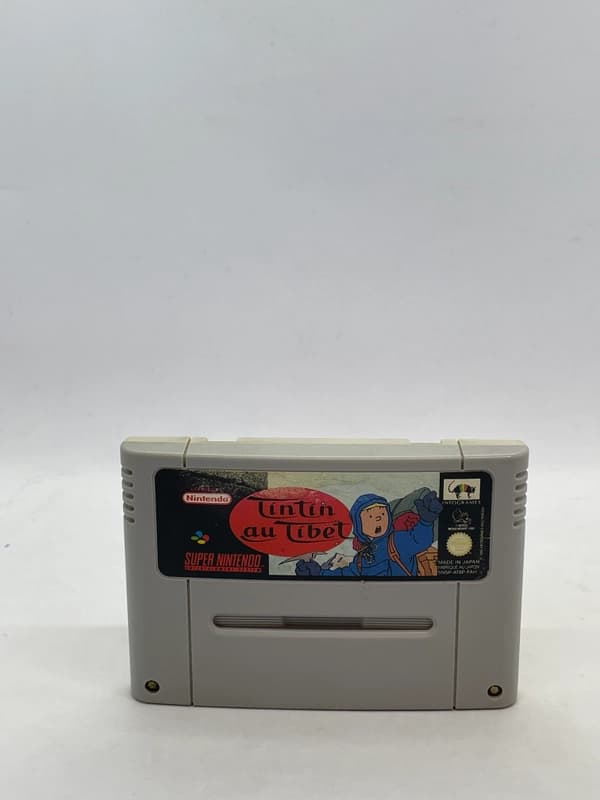
Unoptimized PAL releases: Early Mega Drive titles like the original Sonic the Hedgehog (PAL) run noticeably slower than their NTSC counterparts, with sluggish physics and slowed-down music. Many early SNES titles, including and , suffer the same border-heavy, slowed-down fate.
Shop the gear from this story
Hand-matched to what you’re reading — tested, and covered by our warranty.
Game Libraries: RPGs and Platformers vs Arcade Ports and Sports
Hardware specs only matter insofar as they shaped the software libraries. When buying a retro 16-bit console, your choice should come down to the genres you actually enjoy playing.
The SNES is the undisputed champion of slow-burn JRPGs, sprawling action-adventures, and atmospheric platformers. Titles like The Legend of Zelda: A Link to the Past, Super Metroid, Super Mario World, and Donkey Kong Country represent some of the most polished game design in history. While North America received a golden run of Squaresoft and Enix RPGs that skipped Europe (such as Chrono Trigger, Final Fantasy III/VI, and EarthBound), PAL collectors received a few remarkable consolations. Most notably, Europe received an official English release of Quintet's masterpiece action-RPG Terranigma, along with big-box PAL releases of Secret of Mana, Illusion of Time, Secret of Evermore, and Lufia.
The Mega Drive owned the living room if you wanted arcade action, shoot-'em-ups (shmups), beat-'em-ups, and sports games. Sega's strong arcade heritage meant home conversions of Golden Axe, Streets of Rage 2, Shinobi III, and OutRun felt fast and responsive. Third-party developers like Treasure pushed the system to its limits with Gunstar Heroes, Alien Soldier (which received a physical PAL release but only a digital service release in North America), and Dynamite Headdy. Meanwhile, Electronic Arts built its empire on the Mega Drive; titles like FIFA International Soccer, NHL '94, and Road Rash II almost always played faster and smoother on Sega's hardware than on the SNES.
Comparing multi-platform releases highlights just how differently these two systems were treated:
Get exclusive first access to rare restocks, graded drops, and secret discount codes before anyone else.
Super Mario World
Super Mario Kart
Optimized PAL releases: Later in the generation, particularly from European studios, games were properly adjusted for 50Hz. Rare's Donkey Kong Country series on the SNES and Sega's Sonic the Hedgehog 3 run at closer-to-intended speeds with full-screen or near-full-screen presentation in PAL territories.
Regional lockouts: If you want to bypass 50Hz by importing US or Japanese games, both consoles will fight you. The PAL SNES uses both a curved physical shell (shared with the Japanese Super Famicom, blocking boxy US cartridges) and an internal CIC lockout chip that verifies region and television standard. Early Mega Drive games are often region-free once you bypass the physical slot shape, though titles released from 1993 onward frequently include software locks that check whether the console is set to English/ International or Japanese, and 50Hz or 60Hz.
Under the Hood: Motorola 68000 Speed vs Ricoh 5A22 Color & Mode 7
When looking at SNES hardware specs vs Genesis, it becomes obvious that Sega and Nintendo built their machines with opposing philosophies. Sega engineered the Mega Drive around raw processor speed derived from its arcade boards, while Nintendo built the SNES around custom graphics and audio co-processors.
The Mega Drive's Motorola 68000 runs at more than double the clock speed of the SNES's Ricoh 5A22. Although clock speed is not a direct measure of performance across different architectures, the 68000 has a clear advantage in handling dozens of fast-moving objects, complex collision detection, and rapid scrolling. This is why early SNES shoot-'em-ups like Gradius III and Super R-Type grind to a crawl when the screen fills with bullets, whereas Mega Drive shooters like Thunder Force IV and Gunstar Heroes push chaotic action with far more consistent frame rates.
Where the SNES pulls ahead is its dual-PPU (Picture Processing Unit) architecture. With a master palette of 32,768 colours and up to 256 colours on screen at once, SNES games feature smooth gradients, atmospheric lighting, and genuine hardware transparency effects. The Mega Drive is restricted to 64 simultaneous colours from a 512-colour master palette. To compensate, Mega Drive artists relied heavily on dithering—checkerboard pixel patterns that blended together on blurry 1990s CRT televisions via composite video to simulate extra colours and transparency.
The SNES also features Mode 7, a background layer mode capable of rotating and scaling a flat texture in real time to create pseudo-3D planes in games like F-Zero, Super Mario Kart, and Pilotwings. The Mega Drive lacks native hardware scaling, forcing talented programmers at studios like Treasure and Traveller's Tales to achieve similar effects entirely through clever CPU-driven software tricks.
To overcome the sluggish Ricoh 5A22 CPU later in the console's lifespan, Nintendo built enhancement chips directly into the game cartridges:
DSP-1: Added fast math calculations for Mode 7 games like Super Mario Kart.
Super FX (GSU-1 / GSU-2): Rendered polygon graphics for Starwing (Star Fox in the US) and Super Mario World 2: Yoshi's Island.
SA-1: Essentially a second, faster CPU clocked at 10.74 MHz inside the cartridge, used in Super Mario RPG and Kirby's Fun Pak.
For modern collectors, these enhancement chips mean higher cartridge prices and slightly steeper requirements if you plan to use a flashcart or clone console.
Sound Chips: Sony SPC700 Orchestral Samples vs Yamaha YM2612 FM Synthesis
Nothing divides fans in the SNES vs Sega Genesis debate quite like the audio hardware. Both sound subsystems are iconic, yet they operate on completely different principles.
The SNES uses a custom Sony SPC700 co-processor paired with a 16-bit digital signal processor (S-DSP). It is an 8-channel ADPCM sample-based chip with 64 KB of dedicated RAM. Composers could load tiny digital recordings of real instruments—strings, timpani, pianos, slap bass—and play them back across various pitches with hardware echo and reverb. In the hands of masters like Yasunori Mitsuda (Chrono Trigger) and David Wise (Donkey Kong Country 2), the SNES produced lush, ambient, and orchestral soundtracks that sounded generations ahead of 8-bit chiptunes. The catch was the tight 64 KB memory limit; to squeeze both music data and instrument samples into RAM, developers had to heavily compress the audio, often resulting in a muffled, low-pass-filtered sound when poorly balanced.
The Mega Drive takes the opposite approach, pairing a Yamaha YM2612 6-channel FM (Frequency Modulation) synthesizer chip with a Texas Instruments SN76489 PSG (Programmable Sound Generator) chip left over from the Master System era, all managed by a dedicated Zilog Z80 CPU. Instead of playing back recorded samples (aside from a single channel capable of crunchy 8-bit PCM drum samples), the YM2612 generates sounds mathematically in real time by modulating sine waves.
When programmed well, the YM2612 delivers punchy, metallic basslines, soaring synth leads, and crisp percussion that cut right through the mix. Soundtracks like Yuzo Koshiro's Streets of Rage 2, Sonic the Hedgehog 2, and Thunder Force IV remain masterclasses in electronic and rock synthesis. However, the Mega Drive gained an unfair reputation for "farty," grating audio in the West largely because of the GEMS sound driver. Provided by Sega of America to Western developers, GEMS was easy to use but shipped with a library of harsh default instrument patches that many studios dropped into their games without adjustment.
Disney's Aladdin: They are two completely different games. The Mega Drive version (developed by Virgin Games with Disney animators) features fluid sword-fighting animation and larger sprites, while the SNES version (developed by Capcom) is a tighter, more traditional platformer focused on jumping and acrobatics.
Mortal Kombat: The SNES version has cleaner visuals and more accurate arcade audio, but Nintendo's strict family censorship replaced the arcade's blood with grey "sweat" and neutered the Fatalities. The Mega Drive version looked rougher and sounded tinny, but entering the infamous ABACABB code unlocked the original arcade gore, handing Sega a massive sales victory.
Konami's Run-and-Gun Classics: Both consoles received exclusive entries in Konami's flagship franchises instead of shared ports—and in PAL territories, they were rebranded with robots. The SNES got Super Probotector: Alien Rebels (Contra III) and Super Castlevania IV, while the Mega Drive received the blisteringly fast Probotector (Contra: Hard Corps) and Castlevania: The New Generation (Bloodlines).
Hardware Revisions and Video Output: What to Buy Today
One major advantage of SNES vs Mega Drive collecting in Europe is that both PAL consoles output native RGB video straight from their multi-out ports without internal hardware modifications. Paired with a good quality, properly shielded RGB SCART cable and either a CRT television or a modern upscaler (such as an OSSC or RetroTINK), both consoles can produce a razor-sharp picture.
However, both systems underwent significant motherboard revisions during their lifespans that drastically altered their video and audio quality. Comparing a SNES 1CHIP vs Mega Drive Model 1 is essential before spending your money.
Feature
SNES 2-Chip (SNSP-CPU-01 / 02)
SNES 1CHIP (SNSP-CPU-1CHIP-01 / 02)
Mega Drive Model 1 (VA2–VA6)
Mega Drive Model 2 (VA0–VA1.8)
Video Sharpness (RGB)
Soft; noticeable horizontal smear
Razor-sharp pixel edges
Crisp, though prone to faint vertical "jailbars"
Clean RGB, slightly softer or brighter depending on encoder
Audio Quality
Accurate, discrete Sony audio module (early boards)
Accurate
Rich, full-bodied Yamaha YM2612 FM + clean mixer
Muffled, distorted audio on early VA0/VA1 boards (ASIC YM3438)
Native RGB Output
Yes (requires PAL-specific SCART cable)
Yes (slightly overly bright without resistor fix)
Yes (via 8-pin DIN; stereo requires front headphone jack)
Yes (via 9-pin Mini-DIN with native stereo out)
Reliability Concerns
High risk of CPU/PPU chip rot on early 1992 boards
Standard PAL SNES consoles produced between 1992 and 1994 (SNSP-CPU-01 and SNSP-CPU-02) use two separate video chips (PPU1 and PPU2). Over RGB SCART, these models exhibit a soft, slightly smeared image where bright pixels bleed horizontally into darker backgrounds.
In 1995, Nintendo consolidated the CPU and both PPUs into a single chip on the SNSP-CPU-1CHIP-01 and 1CHIP-02 motherboards. A 1CHIP SNES delivers a dramatically sharper RGB picture that rivals emulators. Because Nintendo used leftover outer shells, there is no guaranteed way to spot a 1CHIP solely from the serial number, though PAL serial numbers starting with UP17 or higher are strong candidates. The most reliable check without opening the console is looking through the cartridge slot or inspecting the rear eject-button mechanism and mold markings, or buying from a store that verifies motherboard revisions.
Cable warning: A PAL SNES requires a PAL-wired RGB SCART cable (which uses 75-ohm resistors to ground on the RGB lines) rather than an NTSC SNES SCART cable (which uses 220uF capacitors). Mixing them up will result in a dark, washed-out, or rolling picture.
Buying the Right Mega Drive
For the Mega Drive, the original Model 1 (released in 1990 in Europe) is widely considered the gold standard, specifically motherboard revisions VA2 through VA6 (often bearing "High Definition Graphics" printed on the circular bezel, though early non-HDG PAL units are also VA4/VA6). These boards contain the discrete Yamaha YM2612 chip and a clean audio amplification circuit. Two quirks to keep in mind with the Model 1:
The rear 8-pin DIN video port only outputs mono audio. A proper Mega Drive 1 RGB SCART cable will include an extra 3.5mm stereo jack lead that plugs into the front headphone port to capture true stereo sound.
Unmodified Model 1 consoles often show faint vertical lines (jailbars) in solid colour backgrounds like the blue sky of Sonic the Hedgehog due to trace interference from the composite video subcarrier.
Avoid the late Model 1 VA7 revision and early Mega Drive Model 2 consoles (VA0 to VA1.8) if you care about sound quality; Sega integrated the sound chip into a single ASIC and used a poorly designed op-amp circuit that leaves the FM audio sounding muddy and heavily distorted.
Finally, if you buy a PAL console today, look into a switchless 50Hz/60Hz region mod (and a Dual Frequency Oscillator for the SNES). This internal modification allows you to hold the Reset button to toggle your PAL console into true 60Hz NTSC mode, eliminating the 17.5% slowdown and black borders while unlocking full compatibility with US and Japanese cartridges.
Collecting and Maintenance in Europe: Clamshells, Cardboard, and Chip Rot
When it comes to collecting SNES vs Mega Drive games in Europe, your budget and shelf space will feel the difference immediately.
Sega shipped almost every PAL Mega Drive game in a durable hard plastic clamshell case with a printed plastic hang-tab and a secure internal clip for the instruction manual. Children in the 1990s kept these cases because they functioned as practical storage. Consequently, buying CIB (Complete in Box) Mega Drive games today is remarkably approachable. Aside from late-era rarities like Mega Man: The Wily Wars, Alien Soldier, or Fatal Fury 2, you can still build a pristine, boxed library of Sega classics without paying a massive premium over loose cartridges.
Nintendo shipped PAL SNES games in thin, fragile cardboard boxes with white cardboard inner trays. Most nineties kids tore the boxes open and threw them straight into the bin. Because loose SNES cartridges survived in the millions while intact cardboard boxes did not, CIB PAL SNES collecting has become a high-end hobby. A Complete in Box copy of a sought-after PAL SNES game will frequently cost three to four times the price of the loose cartridge.
Hardware Reliability and Maintenance
From our repair bench experience, the two consoles age very differently:
SNES CPU/PPU Chip Rot: Early PAL SNES consoles (particularly 1992 SNSP-CPU-01 boards) are increasingly suffering from spontaneous silicon failure inside the custom Ricoh CPU or PPU chips. Symptoms include working music with a black screen, missing sprite layers, scrambled Mode 7 graphics, or broken controller inputs. There is no capacitor fix for this; the only cure is transplanting a working chip from a donor motherboard. Later SNSP-CPU-02 and 1CHIP boards are far more resilient. Additionally, SNES shells often turn yellow due to UV light and heat reacting with flame-retardant bromine in the ABS plastic (purely cosmetic, though older yellow plastic can become brittle).
Mega Drive Longevity: The Mega Drive's off-the-shelf Motorola 68000 and Z80 processors are virtually bulletproof. When a Mega Drive fails, it is almost always down to dry electrolytic capacitors, a worn-out 7805 voltage regulator running hot, or cracked solder joints on the DC power jack and controller ports—all of which can be cheaply and permanently repaired with standard components.
Spotting Fake Cartridges
As 16-bit prices have climbed, counterfeit "repro" cartridges from overseas marketplaces have flooded Europe. While fewerMega Drive games are faked compared to the SNES, high-ticket titles like Hagane, Mega Man X3, Castlevania: Vampire's Kiss, Probotector, and The Punisher require careful inspection:
Check the screws: Original SNES cartridges use metallic 3.8mm Nintendo Gamebit security screws; Mega Drive cartridges usually use 4.5mm Gamebit screws (or specific slotted security screws on EA/Accolade shells). Cheap plastic-moulded screws or standard Phillips screws are an immediate red flag.
Inspect the PCB edge: Look inside the bottom of the cartridge at the green circuit board edge connector. Authentic 1990s PCBs have a smooth, angled bevel on the edge to prevent wear on the console's pin connector. Cheap modern fakes have a flat, sharp, machine-cut 90-degree edge and often use bright white or yellow solder mask colors.
Open the shell: For any game worth substantial money, open the cartridge with a Gamebit screwdriver. Authentic Nintendo boards have Nintendo and the game's specific ROM code (such as SNSP-xx-0) stamped directly onto the mask ROM chip legs/top, without black epoxy blobs or modern flash memory adapter boards wired inside.
FAQ
Is the Sega Genesis the same thing as the Mega Drive?
Yes, they are the exact same 16-bit console hardware. Sega released the system as the Mega Drive in Japan (1988) and Europe/Australia (1990), but renamed it the Sega Genesis for the 1989 North American launch due to a trademark dispute over the Mega Drive name.
Can a PAL SNES or Mega Drive play US and Japanese games?
Not out of the box. Both consoles use physical cartridge slot shapes and regional lockout checks (along with a 50Hz vs 60Hz television speed difference) to block imports. To play NTSC games on PAL hardware, you will need a pass-through converter cartridge, a flashcart, or an internal switchless region-free/60Hz modification.
Which console is cheaper to collect for in Europe: SNES or Mega Drive?
The Sega Mega Drive is significantly cheaper to collect for in PAL territories, especially if you prefer Complete in Box (CIB) games. Mega Drive games were sold in sturdy plastic clamshell cases that survived in huge numbers, whereas flimsy cardboard SNES boxes were usually discarded in the 1990s and now command a steep premium.
Which model of the SNES and Mega Drive has the best picture quality?
For the SNES, look for a late-production 1CHIP revision (SNSP-CPU-1CHIP-01 or 02), which combines the video processors to output a razor-sharp RGB SCART image. For the Mega Drive, an early Model 1 (motherboard revisions VA2 through VA6) offers the best combination of crisp RGB video and original, unmuffled Yamaha YM2612 FM audio.
Conclusion: Which 16-Bit Console Actually Won?
Declaring a single winner in the SNES vs Sega Genesis rivalry misses what makes the 16-bit era the golden age of 2D gaming. Because the two consoles share so little hardware DNA, even their multi-platform games feel completely distinct. If you want deep RPGs, sprawling adventure games like Super Metroid, and lush sample-based soundtracks, the Super Nintendo (ideally a 1CHIP or later 2-chip revision) is unbeatable. If you prefer fast-paced arcade action, shoot-'em-ups, punchy FM synth music, and affordable Complete-in-Box collecting on a budget, the Sega Mega Drive Model 1 is the better buy for European shelves.
Whichever side of the 16-bit fence you land on, starting with clean, verified hardware saves a lot of frustration down the road. At RetroBroker, we inspect, clean, and test our second-hand SNES and Mega Drive consoles, accessories, and authentic PAL cartridges so you can plug in an RGB SCART cable and start playing with confidence.