RetroBrokerRetroBroker
WishlistAccount

Stay in the loop

Subscribe to our newsletter for exclusive offers, updates, and more.

RETROBROKER

Rediscover classic games, consoles, and accessories. Find your next favourite and keep the nostalgia alive.

Categories
  • PlayStation
    • PlayStation 3
    • PlayStation 5
    • PlayStation accessories
    • PlayStation 1
    • PlayStation 2
    • PlayStation 4
    • PlayStation Portable (PSP)
    • PlayStation Vita
  • Nintendo
    • Nintendo 64
    • Game Boy
    • Nintendo 3DS
    • Nintendo Wii U
    • Nintendo accessories
    • Nintendo SNES
    • Game Boy Advance
    • Nintendo DS
    • Nintendo Wii
    • Nintendo Entertainment System (NES)
    • Nintendo Switch
    • Nintendo GameCube
    • Game Boy Color
  • Xbox
    • Xbox 360
    • Xbox Original
    • Xbox One
  • SEGA
    • Sega Mega Drive
    • Sega Game Gear
    • Sega Genesis
    • Sega Dreamcast
    • Sega Saturn
    • Sega Master System
  • PC games
    • Blu-ray films and series
      • View all categories→
      Collections
      • PlayStation
      • PlayStation 1
      • PlayStation 2
      • PlayStation 3
      • PlayStation 4
      • Nintendo
      • View all collections→
      Useful Links
      • Check out the flyer
      • Gift cards
      • Contact
      • 1-UP Club Membership Terms
      • Shipping and Returns
      • Terms and Conditions
      • Privacy Policy
      • Data Deletion Policy
      Language:British English
      Shipping to:United Kingdom

      © Copyright 2026 Retrobroker sp. z o.o. — Designed in Poland

      This website is independent and not affiliated with or endorsed by Nintendo or Sony. All trademarks, copyrights, and logos featured on this site belong to their respective owners.

      Retrobroker is a registered trademark of Retrobroker sp. z o.o. Sielska 45A, 10-801 Olsztyn, Poland KRS: 0001062625 NIP: 7393990456 REGON: 526634737

      1. Home
      2. Blog
      3. The 1983 Video Game Crash Explained: Why Europe Survived
      Blog

      The 1983 Video Game Crash Explained: Why Europe Survived

      Published on 31 August 2026

      The 1983 Video Game Crash Explained: Why Europe SurvivedRETROBROKER

      The 1983 video game crash wiped out the North American console industry, leaving retailers with mountains of unsold inventory and bankrupting once-legendary developers. For European players and modern collectors, understanding this sudden market collapse is the key to navigating regional hardware differences, spotting valuable PAL variations, and making sense of modern console ecosystems.

      The Atari 2600 Saturation and the US Market Collapse

      The seeds of the crash were sown when Atari lost control of who could publish games for their hardware. After a group of disgruntled Atari programmers left to form Activision, a subsequent legal ruling established that third-party companies could manufacture and sell their own cartridges without paying royalties. This lack of publishing control opened the floodgates for anyone with manufacturing capital to enter the video game business. Suddenly, companies that primarily sold dog food and breakfast cereal were financing hastily coded video games, leading to a massive flood of low-quality shovelware on store shelves.

      Alongside this software glut, consumers were suffering from severe hardware fatigue. By 1983, the market was saturated with second generation consoles all vying for space beneath the living room television. Shoppers were confused by a fragmented ecosystem that included the Atari 2600, Atari 5200, ColecoVision, Intellivision, and the Magnavox Odyssey 2. None of these systems were cross-compatible, meaning a game purchased for one console was useless on another, fracturing the consumer base.

      When the bubble burst, retailers panicked. Desperate to clear shelf space for more profitable goods, shops heavily slashed prices on both loose and boxed games, tossing premium titles into bargain bins for a fraction of their original retail price. This rapid retail markdown spiral caused the North American video game crash, an event later referred to by Japanese developers as the Atari shock. Legitimate third-party developers could not compete with this clearance pricing and quickly went bankrupt, stalling the industry.

      The E.T. Landfill Myth vs. Collecting Reality

      A common misconception is that the Atari 2600 ports of Pac-Man and E.T. the Extra-Terrestrial single-handedly caused the industry to collapse. In reality, these games did not cause the crash; they were simply the most high-profile symptoms of corporate overproduction. Atari infamously manufactured more copies of Pac-Man than there were consoles in homes, assuming consumers would buy the hardware just to play the game. Meanwhile, E.T. was coded in a rushed six-week window to meet the holiday shipping deadline, resulting in a confusing and frustrating gameplay experience.

      For decades, urban legend claimed that Atari buried millions of unsold E.T. cartridges in the New Mexico desert. The 2014 Alamogordo excavation finally proved the ET Atari 2600 landfill burial was real, but it also debunked the myth that it was a targeted disposal of one bad game. The dig unearthed crushed copies of Centipede, Defender, Star Raiders, and various hardware components, proving this was a mass inventory purge by a failing corporation.

      For modern retro game collectors, this history dictates current market realities. Despite the infamous desert burial, E.T. is not a rare game. Atari manufactured millions of copies, and loose cartridges are incredibly common and hold very little financial value today. Complete in Box (CIB) copies in good condition command a slight premium for their historical novelty, but they are nowhere near scarce.

      When purchasing expensive pre-crash games, collectors must be vigilant against modern reproductions. You can spot authentic Atari 2600 cartridges from this era by checking a few physical traits:

      • PCB Thickness: Original Atari circuit boards are noticeably thicker than modern reproduction boards, and the bevel on the connector edge is often shaped differently.
      • Label Glue: Original silver-label Atari games often show a distinct grid-like glue residue bleeding through the paper after forty years of aging. Modern fakes usually look entirely smooth and perfectly glossy.
      • Shell Weight: Authentic plastic shells feature interior shielding and a heavier plastic mix, making them feel denser than cheap, modern 3D-printed or injection-moulded shells.

      Explore products

      Explore more products from our catalogue.
      • Game of Thones Season 2 Blu-Ray

        Game of Thones Season 2 Blu-Ray

        £41.00
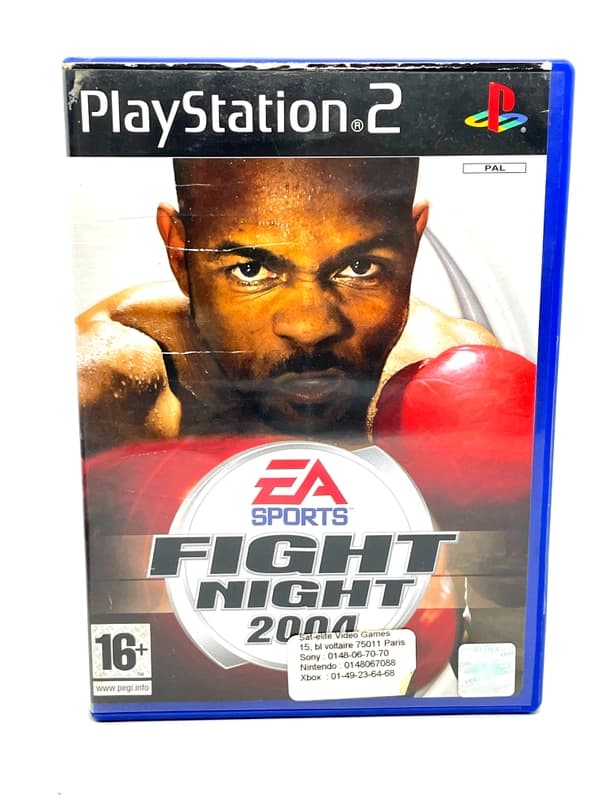
      • Fight Night 2004 PS2

        Fight Night 2004 PS2

        £7.00

      Why the Crash Barely Registered in PAL Territories

      While the US console market burned to the ground, the UK and Europe were experiencing a golden age of home computing. Gamers across PAL territories largely bypassed the 1983 video game crash because they were already transitioning away from dedicated consoles. Instead, the market was dominated by affordable microcomputers like the Sinclair ZX Spectrum, Commodore 64, and Amstrad CPC, which doubled as educational tools to justify the purchase to parents.

      The primary difference that saved Europe was the choice of physical media. European gamers embraced cheap audio cassette tapes over expensive ROM cartridges. Manufacturing a custom silicon ROM chip required massive upfront capital, whereas a cassette tape cost mere pennies to duplicate. This completely insulated European publishers from the severe inventory risks that destroyed Atari. If a cassette game failed to sell, the publisher lost a minor investment; if a massive run of Atari cartridges failed, it bankrupted the studio.

      This lack of strict licensing and incredibly low barrier to entry empowered a generation of European bedroom coders. Small teams could code a game in their bedroom, duplicate it onto tapes, and sell it via mail order or in local newsagents. This created a highly experimental, distinct regional gaming culture that simply ignored traditional video game consoles until the late 1980s.

      FeatureUS Console Market (1983)European Microcomputer Market (1983)
      Primary HardwareAtari 2600, ColecoVision, IntellivisionZX Spectrum, Commodore 64, Amstrad CPC
      Dominant MediaSilicon ROM CartridgesStandard Audio Cassette Tapes
      Manufacturing RiskExtremely high (expensive silicon, long lead times)Extremely low (cheap tapes, rapid duplication)

      Keep the collection going

      Discover more retro finds from our catalogue.

      Shop all products
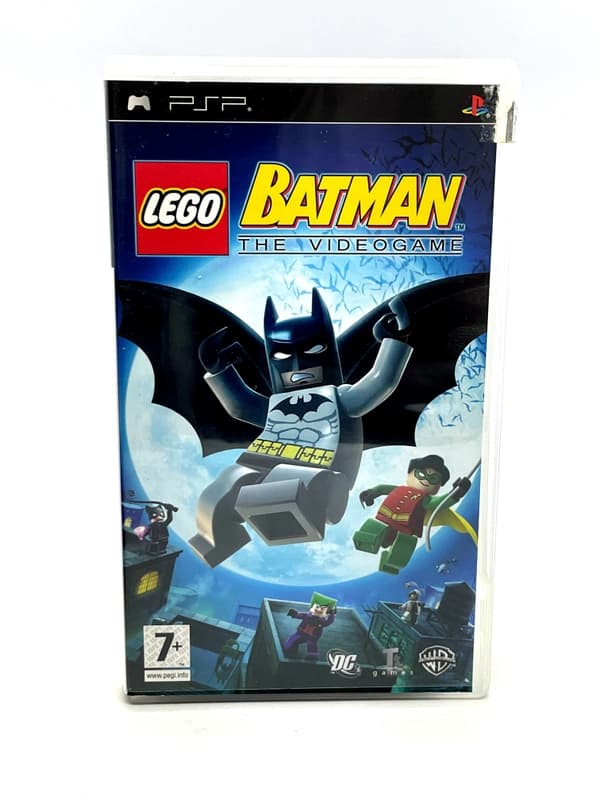
      • Lego Batman The Video Game PSP

        Lego Batman The Video Game PSP

        £9.00

      Keep reading

      More stories from the Retrobroker blog.

      • Support and warranty for retro games and consolesRETROBROKER
        30 October 2026

        Support and warranty for retro games and consoles

        Check the product description, current warranty and returns terms, and how to contact us about an order.

      • Can PS3 play PS1 and PS2 games? A compatibility guideRETROBROKER
        30 October 2026

        Can PS3 play PS1 and PS2 games? A compatibility guide

        Learn how PS3 compatibility with PS1 and PS2 games depends on the model, disc format and region.

      Awaiting New Challengers

      Join The Bounty Board

      Get exclusive first access to rare restocks, graded drops, and secret discount codes before anyone else.

      No spam. Unsubscribe anytime.

      Developer Ecosystem
      Corporate studios, high barrier to entry
      Independent bedroom coders, mail-order sales
      Retail StrategyDedicated toy stores and electronics retailersNewsagents, hobby magazines, and electronics shops

      How the Crash Impacts Second-Generation PAL Collecting Today

      The fallout of the North American collapse heavily dictates the realities of retro game collecting PAL hardware today. Because so many US developers went bankrupt during the 1983 and 1984 crash, they never had the time or capital to localise their final games for the European market. Consequently, late-release pre-crash titles are notably scarce in PAL regions, making them highly sought after by European completionists who want full sets.

      Collectors must also be acutely aware of Atari 2600 PAL differences when importing games to fill these collection gaps. If you import a cheaper US NTSC cartridge to play on an unmodified European CRT television, you will experience severe technical issues. The game will often display incorrect colours, run in black and white, or suffer from a continuous vertically rolling picture due to the difference in television refresh rates and colour encoding.

      Furthermore, buyers must be cautious of 'PAL optimised' games from this era. Because the European PAL television standard runs at 50Hz compared to the US NTSC 60Hz standard, many early games were poorly converted by surviving studios. These unoptimised PAL ports run 17 percent slower than their original NTSC counterparts and often feature squashed aspect ratios with large black borders at the top and bottom of the screen. We always recommend researching a specific game's PAL conversion quality before paying a premium for a boxed European copy.

      Nintendo's Solution: The 10NES Chip and Regional Lockouts

      Following the crash, US retailers refused to stock anything resembling a video game console. Nintendo bypassed this stigma by heavily rebranding their successful Japanese Famicom as the Nintendo Entertainment System (NES) for Western markets. By bundling the console with the R.O.B. (Robotic Operating Buddy) accessory and the Zapper light gun, Nintendo successfully disguised the NES as a high-tech interactive toy.

      To prevent the flood of unlicensed shovelware that killed Atari, Nintendo introduced a draconian licensing programme. At the heart of this strategy was the 10NES lockout chip. This proprietary hardware handshake ensured that only officially licensed, Nintendo-manufactured cartridges would boot on the console. If a publisher wanted to release a game on the NES, they had to pay Nintendo to manufacture the cartridges and were strictly limited in how many games they could release per year.

      Unfortunately, this anti-crash measure haunts European collectors today. Nintendo used the 10NES chip to fragment the PAL market into two distinct, incompatible lockout regions: PAL-A (covering the UK, Italy, and Australia) and PAL-B (covering the rest of Europe, including France, Germany, and Spain). A PAL-A cartridge will trigger an endless blinking red light on a PAL-B console, and vice versa, rendering the game unplayable.

      Thankfully, there is a permanent hardware maintenance fix. Performing a 10NES lockout chip bypass involves opening the console, locating the CIC chip on the motherboard, and carefully clipping pin 4. This simple modification disables the regional restrictions entirely. Once pin 4 is clipped and grounded, the console will freely play PAL-A, PAL-B, and even NTSC cartridges, while simultaneously fixing the infamous blinking red light issue caused by a dirty lockout handshake.

      FAQ

      Did the video game crash of 1983 affect Europe?

      No, Europe largely bypassed the console crash because gamers had already transitioned to affordable microcomputers like the ZX Spectrum and Commodore 64. These systems used cheap audio cassette tapes instead of expensive ROM cartridges, which completely insulated the European market from the severe inventory and manufacturing risks that destroyed the North American industry.

      Are Atari 2600 E.T. cartridges rare today?

      Despite the famous desert landfill burial, E.T. the Extra-Terrestrial is incredibly common and cheap to buy loose because Atari manufactured millions of copies. Boxed CIB copies in good condition command a slight premium due to their historical notoriety, but they are not considered rare by collectors.

      What caused the video game crash of 1983?

      The market was flooded with too many incompatible consoles and low-quality, unlicensed games, causing a massive loss of consumer confidence. To clear unsellable inventory, retailers heavily discounted games. This bargain-bin pricing bankrupted legitimate developers who could no longer sell their games at full retail price.

      How did Nintendo fix the video game industry after the crash?

      Nintendo introduced a strict licensing programme and the 10NES hardware lockout chip to ensure only approved, high-quality games could run on the NES. They also redesigned the console to look like a VCR and marketed it with accessories like R.O.B. to convince wary retailers that it was an interactive toy rather than a traditional video game console.

      Conclusion

      The 1983 video game crash remains one of the most pivotal events in entertainment history, completely reshaping how hardware is manufactured, how software is licensed, and how games are preserved. By understanding the shift from cartridges to cassette tapes, the reality of the desert landfill, and the implementation of regional lockout chips, you can make much smarter purchasing decisions for your collection. At RetroBroker, we regularly test and verify regional compatibility for all our second-generation stock, ensuring you never have to guess whether a classic cartridge will boot on your childhood hardware.

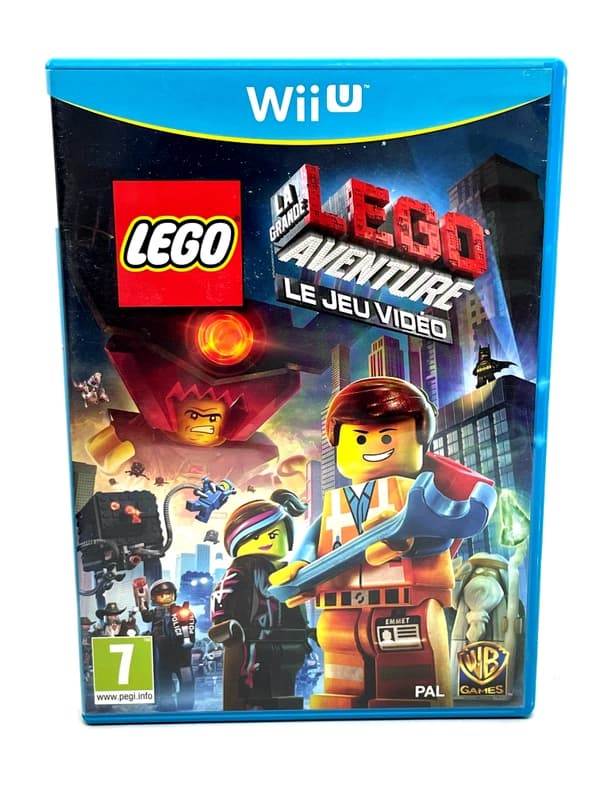
      Lego The Movie Wii U

      Lego The Movie Wii U

      £13.00
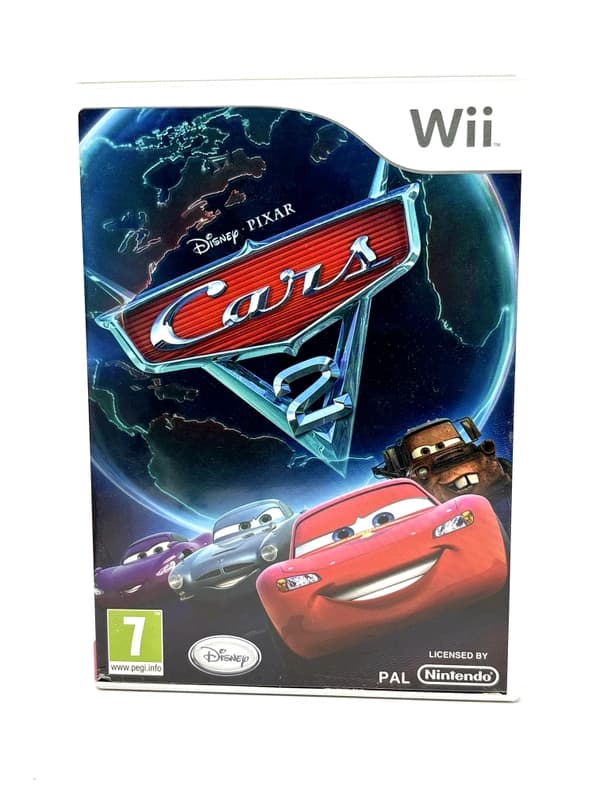
    • Cars 2 Nintendo Wii

      Cars 2 Nintendo Wii

      £9.00
    • Grey's Anatomy Nintendo Wii (Nowa w folii)

      Grey's Anatomy Nintendo Wii (Nowa w folii)

      £19.00
    • Will my Nintendo Switch games work on Switch 2? What to checkRETROBROKER
      30 October 2026

      Will my Nintendo Switch games work on Switch 2? What to check

      Check Nintendo Switch game compatibility with Switch 2, controller requirements and how to transfer games and save data.